

CYCLE OF ERROR
Our proCOURSE for groups focussing on increasing the degree of acceptance of error and developing soft skills

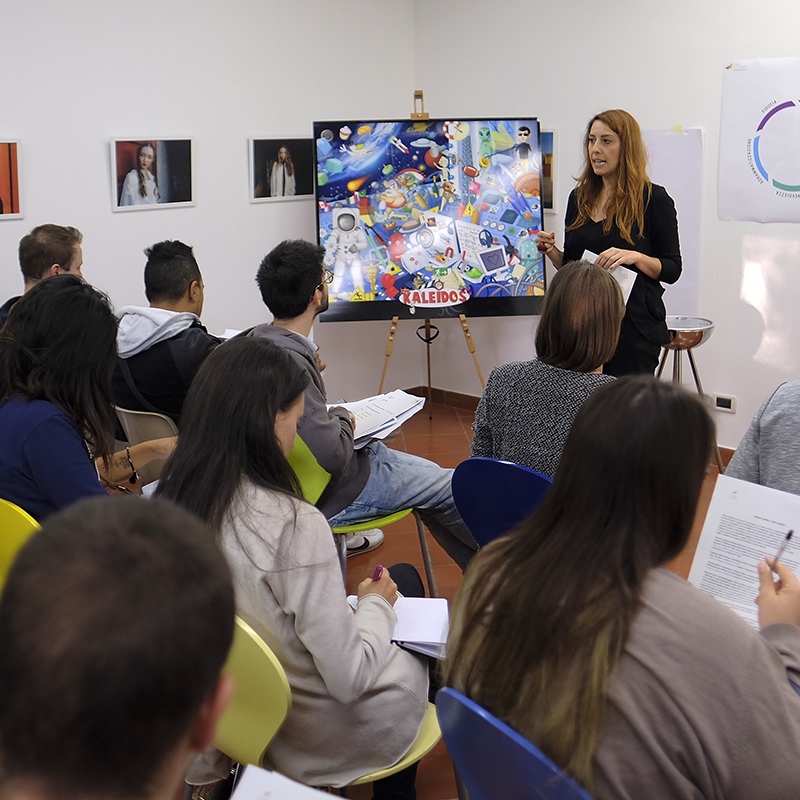 The word “error” brings to mind the concept of erring and straying. Error denotes the act of drifting – wandering off – the proper path, taking a peregrine and unpredictable route.
Error is a breach of a rule that does not conform to accepted morality, an act of expulsion that triggers a social sanction.
And while a mistake is a “blunder blitz”, a flash of oversight, error evokes something more systematic, incorporated into an organisation, something that is so much an integral part of business processes that it may be repeated many times.
Although Latin speaking ancients coined the phrase: “errare humanum est”, (to err is human) such popular wisdom has always taught us that “we learn from our mistakes”, and although error is a trending topic, the fear of failure, of making mistakes is one of the most widespread fears, and we rarely really train our ability to learn from mistakes, turning them into opportunities.
And this is a paradox; if we think about the fact that our brain learns through trial and error, “We learn from our mistakes” is not just a saying: our brain, since birth is geared to making mistakes and learning from tumbles and slips. Error is therefore the first stage of our knowledge and is the focus of our path to advancement.
PROBLEMS
The Scuola intends to answer 3 problems:
1. Mistakes and Bias
Automatic and stereotyped behaviour predominates in many human actions and underlies decisions that can lead to error. Ideologies and prejudices generate cognitive distortions that hinder innovation and creativity, favouring mistakes and failures.
While, on the one hand, we are not fully aware of these patterns and of the cognitive biases that lead us to err and fail, on the other, we almost never stop to analyse our mistakes to avoid repeating them over time, with the result that … we continue to make mistakes, the same mistakes!
2. Culture
Failure is experienced as an indelible mark and error is considered an invalidating social stigma rather than a journey of self-discovery, exploring our limits and our talents. The outcome? Frustration, anxiety, fear of failure and inertia.
3. Learning
When we look at learning – whether in the school classroom, or vocational corporate courses – the fear of failing, of giving a wrong answer and, therefore, the experience of making mistakes is often associated, again, with receiving judgemental disapproval from significant people, such as our teachers, our managers or our other team members.
What we see is:
- scarce attention paid to the learning needs and soft skills required by the labour market
- learning methods and tools that fail to generate learner involvement
- difficulty in providing differentiated information based on the various characteristics of the learners in the classroom
- inability to evaluate the course with respect to the learning level of the learner
SOLUTION
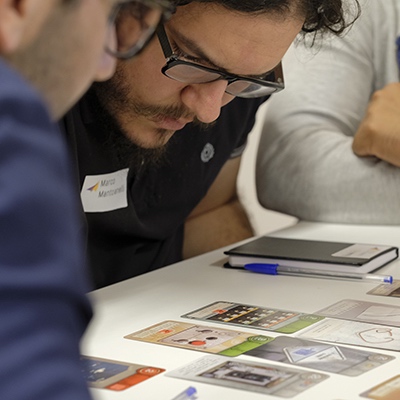 The Cycle of Error offers a one-of-its-kind learning experience. A revolutionary group learning opportunity, both from the standpoint of approach and method, and which provides a toolbox through which:
- to increase the degree of acceptance of error and failure
- to change the rules
- to develop soft skills
- to strengthen self-confidence and that of other people
- to promote knowledge and experience transfer and contamination.
In the Cycle of Error classes, you will also find a “safe space”, a sharing space, where discovering mistakes, sharing them, open analysis, (self)correction take place in a non-judgemental environment. The aim is to make each person in the group aware of their actions, learning together how to change them for choosing more effective courses of action; in essence, to grow through learning, developing a critical spirit, and stimulating a constructive approach that leads to success and achieving our goals.
MISSION
We created the Cycle of Error with the mission in mind to offer a different lens – that of making mistakes – through which to look at ourselves and the world around us.
It is a tool through which we want to build a healthy culture of failure, starting by changing the words we use:
- A mistake is a stumbling block from which we can learn
- Making mistakes is a natural deviation from a path or a rule without which there would be no innovation and progress
- Failure is an alternative path for exploiting a new opportunity
Is it possible to transform mistakes into learning opportunities?
We think it’s possible!
How?
Learning to lose so we can win
Recognising cognitive biases
Analysing mistakes made
Learning and enhancing soft skills
WHAT ARE THE CYCLE OF ERROR MODULES?
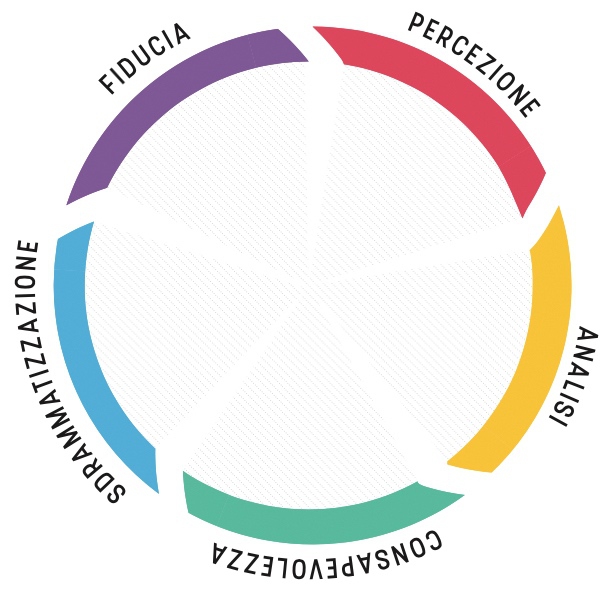 The Cycle of Error features 5 modules:
- Perception: evaluation and analysis of the subjective and objective perception of mistakes and failure
- Analysis: examination of mistakes, and in-depth study of cognitive bias and mindsets
- Awareness: becoming aware of our mistakes and strengths
- Downplaying: how to laugh at our mistakes
- Self-confidence: a growth path, more robust awareness and self-confidence and confidence in other people
Each course ends with testimonials from people who have extraordinary stories to share: because just sharing the story of their own experience, how they have overcome the fear of failure, how they learned from mistakes and how this learning was converted to opportunities for success and how mistakes are transformed into a source of shared growth generating progress.
WHO THE CYCLE OF ERROR ADDRESSES?
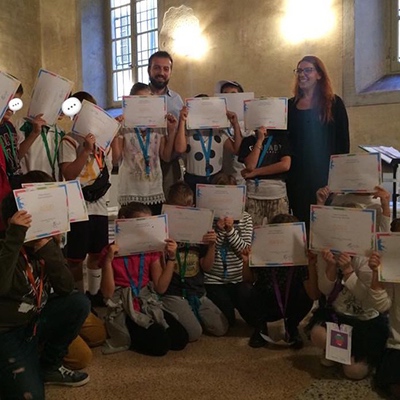 The Cycle of Error addresses groups of:
- School pupils (aged 10 and over) and university students
- NEET (Not in Education, Employment, or Training – people who are not studying or working) and adolescents at risk of dropping out of school
- Teachers, educators and parents
- Job seekers who intend to change jobs or jobs within the same company
- Managers, business owners, start-ups and aspiring entrepreneurs
- Banks and investors
For the 3-10 years’ age range, dedicated play workshops are offered, specifically, the Praising Defeat module.
BENEFITS
- Learning about the various types and forms of mistakes
- Developing the ability to look at mistakes and failure from a different perspective
- Taking up the challenge and starting a personal dialogue and overcoming the sense of guilt and fear of failure
- Stimulating openness and sharing our mistakes with others and overcoming the fear of being judged
- Identifying recurring mistakes and activating correction mechanisms
- Acquiring a dynamic mindset
- Developing a creative approach