

PROFESSIONALS
The most successful professionals are not defined by the number of failures they have had, but by how they dealt with them: why it is important to work on the “internal” causes that may lead to mistakes

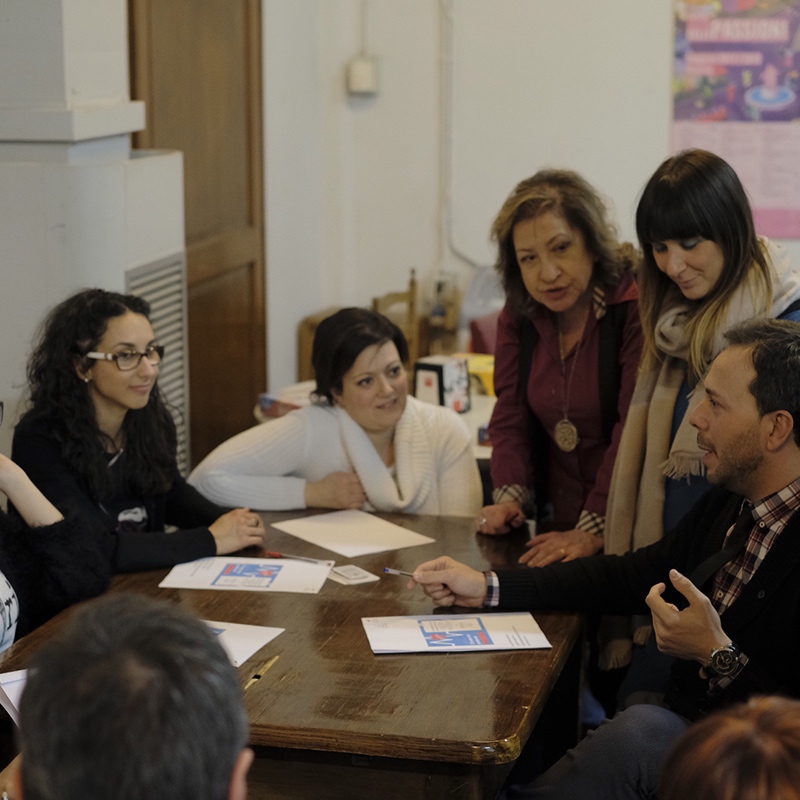 The practice of any profession – whether it is as individual business owners, corporate managers heading up a team, freelancers, employees, or other professions – making mistakes and failing are options that need to be contemplated.
For a business owner entering the market with the aim of revolutionising an industry sector, failure will have a financial and psychological cost for himself, his family, creditors and other interested parties and, also, on the business as a whole. In many cultures and countries where efficiency is a key benchmark, failure for a business owner may also represent a social blemish, a “glitch” that may hinder an idea for future ventures.
For a corporate manager, the uncertainty of making a wrong choice, of not leading the team to success, of not knowing how to resolve internal conflicts, manage increases in stress levels and workloads, the fear of making mistakes or not knowing what kind of manager he/she wants to be for a team, these concerns are round-the-clock in a constantly changing environment.
As employees, whether we are part of a team or not – the fear of making mistakes in performing our job tasks, of not knowing how to manage so-called “political” or conflict situations, the fear of not advancing from the career perspective, but also the fear of not being up to filling a certain role or the uncertainty of really wanting it, are familiar feelings that often block or hinder our success.
 Despite the quote from one of Samuel Beckett’s works: “Worstward Ho” -error “Try. Try again. Fail again. Fail better” sounds like the mantra for a life lesson, like a rule that applies to virtually every domain of human activity, and although we know that the path of many successful entrepreneurs and professionals has been marked by a number of failures, it’s still difficult to accept that many excellent outcomes very often require a prior number of trials and relevant failures.
If it is true that making mistakes and failing in our jobs are an option we need to contemplate, it is also true that often this may happen as a result of contributing factors.
Some of these factors are external: socio-cultural, political and economic changes, environmental dynamics or the strategies of a competitor; but others are “internal”: the fear of making mistakes, fixed mindset, lack of focus and motivation, lack of strategic soft skills, wrong expectations, scarce knowledge of ourselves and of the objectives that we really want to achieve.
And while the external factors – although sometimes predictable – are most of the time outside our control, the “internal” causes that may lead us to make mistakes are those where we are able and need to work on, to know ourselves better, to minimise the risk of failure and – if this happens despite everything – to be able to manage it, accept it, having developed the ability to analyse it for drawing important lessons for the future.
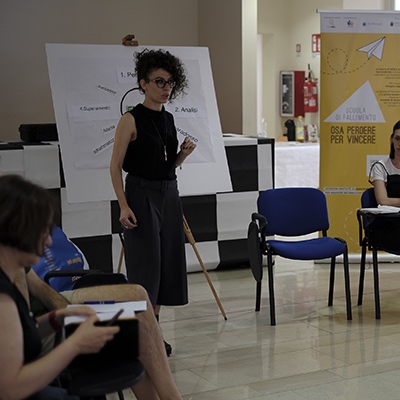 The most successful professionals are not defined by the number of mistakes they have made or failures they have experienced, but by how they dealt with them.
This is exactly our approach at Scuola di Fallimento. Through proCOURSES for groups (The Cycle of Error) or for individuals (The Cycle of Choice), we help professionals in any business area to:
- be prepared and know how to manage situations inherent in mistakes and failure, avoiding brooding and loss of self-esteem due to identifying with the mistake itself (if I made a mistake, then there’s something wrong with me), but rather knowing how to make it an objective fact to be analysed and from which to draw a lesson
- better understanding of ourselves – through game playing and coaching. An opportunity to look within, to ask the reason for things (why did I fail? Why did I take on this job?), for understanding what is needed to think more clearly and to tackle any difficulties
- train all those “soft” skills (character and interpersonal traits), such as solving complex problems, critical thinking, creativity, managing people and emotional intelligence, listening and other skills, which will allow us to also respond better in difficult or changing situations
To find out more and build the proCourse that best suits your needs – contact us!