

EXPERIENTIAL METHOD
A combination of experiential and immersive methods, where we learn and teach – starting from actual experiences – entering into a relationship with our own narratives, contexts and issues.

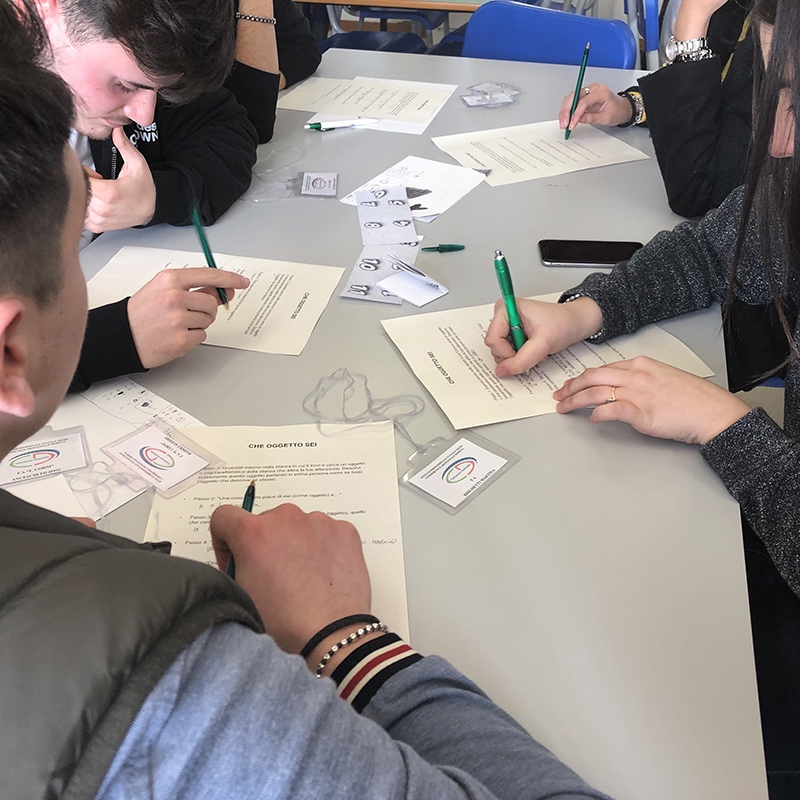 Overcoming the passive learning model is achieved through the use of experiential and immersive methods which guarantee learning and full involvement of participants.
The learning logic behind what is defined as “experiential learning situations” is that we learn and teach starting from actual experiences, entering into a relationship with our own and other people’s narratives, contexts and issues.
Starting from a real experience, an observation, reflection and action path is activated.
Concepts are then formalised with a view to applying them to new situations.
In the experiential teaching approach, giving and receiving knowledge are part of the same goal: that of achieving self-improvement and creating a loop for embracing improvement that is self-perpetuating.
In fact, through teaching, we learn and through learning, we have the possibility of passing on our knowledge to help another person.
As if the two actions were actually a single action.
In experiential situations, the group is at the same time the subject and object of learning and investigation.
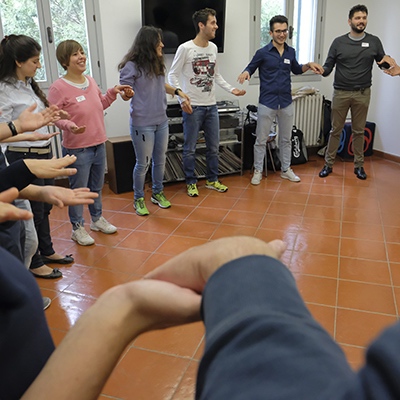 Experiential learning is also a type of unconscious learning: by starting, stopping, stumbling and focussing on the experience we are living, it is possible to understand what our cognitive biases are, enhancing our abilities and exploring new ones.
It is ideal for all organisations looking to promote active working together and pro-active participation of staff in learning processes.
The methods used include:
- Experiential instruction: coaching and mentoring
- Stepping Out of Comfort Zone development
- Action learning
- Workshop scenarios
- Awareness scenarios
- Incident and Self-case study
- Simulation
- In-Basket